7

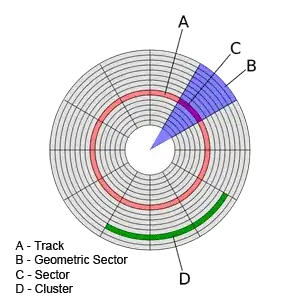
In one rotation, how many sectors are passed over and how many tracks are passed over?

If you know the average value of sectors per track for a hard drive, how do you use this to estimate the number of cylinders?

Do all modern hard drives have 63 sectors per track? Are there any hard drives that have more than this?

Oliver Salzburg
  • 86,445
  • 63
  • 260
  • 306
Phenom
  • 6,597
  • 25
  • 81
  • 121
  • Please refrain from asking the same question in 3 different ways. Especially when a perfectly legitimate answer was given already http://superuser.com/questions/107704/hard-drive-bytes-per-sector/107714#107714 (see page 9) If you do not get an acceptable answer consider editing your original question with more details or adding a bounty(http://superuser.com/faq). – heavyd Feb 11 '10 at 21:44
  • 1
    @heavyd: actually his 3 questions are all related, but separate, questions. they're all closely related enough that they could have been posted as one question, though, so perhaps the best thing to do is close 2 and edit the last to include the others. – quack quixote Feb 11 '10 at 22:41
  • See this set of 6 closely related questions: http://superuser.com/questions/119446/sectors-and-clusters http://superuser.com/questions/119051/transfer-time-for-a-file http://superuser.com/questions/107723/hard-drive-sectors-vs-tracks http://superuser.com/questions/119048/number-of-tracks http://superuser.com/questions/119026/rotational-latency http://superuser.com/questions/119030/bytes-per-track – Jonathan Leffler Mar 16 '10 at 11:07
  • And http://superuser.com/questions/120461/transfer-time-of-a-cylinder – Jonathan Leffler Mar 16 '10 at 11:13
  • and http://superuser.com/questions/120489/sectors-per-track – quack quixote May 06 '10 at 07:22

3 Answers3

6

No easy way to say - every hard drive is different and has different density, on top of this, there are obviously more the further away from the centre you are as the circles become wider.

Pick a model, and give a bit more information (such as the outer most circle) and I will try to help you further.

alt text

Gaff
  • 18,569
  • 15
  • 57
  • 68
William Hilsum
  • 116,650
  • 19
  • 182
  • 266
  • I'm trying to figure out the maximum sectors per track of this hard drive: http://www.scsi4me.com/hitachi-deskstar-e7k1000-hde721050sla330-500gb-7200rpm-sata-hard-drive.html – Phenom Feb 11 '10 at 21:31
  • Sorry - found the datasheet here - http://www.hitachigst.com/tech/techlib.nsf/techdocs/2232622C3696936F8625747B0082266E/$file/Deskstar_E7K1000_DS.pdf, however, (could be wrong here) I don't think there is a hardware maximum, but controlled by the filing system you use. – William Hilsum Feb 11 '10 at 21:52
6

Almost all modern hard drives report 63 sectors per track, because that's the maximum allowed by the BIOS specs.

This number (along with heads and cylinders) is of course fake and used only for compatibility addressing with very old programs. Internally they use a simple sector number starting from 0 (called LBA mode).

The real sector per track number is not only much larger, but it also varies depending on the distance from the spindle. See, for example, this page from the makers of HDDScan.

efotinis
  • 4,164
  • 1
  • 22
  • 22
  • This is correct. – Alex Mar 13 '10 at 09:18
  • Ah the days of [CHS](http://en.wikipedia.org/wiki/Cylinder-head-sector); how I do *not* miss them. Even with a formula, it was still difficult to get the numbers to work. – Synetech Sep 13 '11 at 06:28
2

As the disk spins, sectors travel under the read head at a rate that depends on the RPM of the disk. So the transfer rate is the rotation rate times the number of sectors in a track times the number of bytes in a sector.

(RPM / 60) * Sectors-per-track * bytes-per-sector = bytes-per-second