3

In April 2022 I updated Windows 10 on my laptop from version 1803 (build 17134.1246) to version 21H2 (build 19044.1682). I was shocked to realize that a normal restart would now take 45 minutes!
Back in 1803 I cannot recall that it ever took more than 10 minutes.

Microsoft may have done a lot of changes over the last four years to crapify their operating system, but which of these changes has had such a devastating impact that it effectively bricks my laptop?

My question

Which is the most significant change I can make to Windows 10 (Windows 11) to speed up the restart?

My hard drive is an HDD (hard disk drive), but I am curious to learn how I can speed up the restart on an SSD (solid-state drive) as well. 1

On an SSD the bad implications from bloatware might have more to do with using up space on the hard drive than making the computer sluggish. For such an example, see this answer to a question on how to disable the DiagTrack service and stop Windows it from piling up useless data on the hard drive.

But also for an SSD I would like to know what can be done to use less CPU and memory on pointless activities. – Even on an SSD computer I have often met the agonizing (Not Responding) message in the title bar of my applications.

Reference


1 Don't tell me to replace my 2 terabytes HDD with an SSD! That's not what I am asking about here.

Henke
  • 813
  • 1
  • 8
  • 20
  • You could replace the 2 TB HDD with a 4 TB HDD and short-stroke it ;) – Andrew Morton May 22 '22 at 17:38
  • Just installing an SSD should significantly speed up your restart time, but you can also check to make sure you have "Fast Start-up" enabled. Keep in mind sometimes having this feature turned on can affect certain devices from starting up properly. Usually high end video break out boxes and such. – Mastaxx May 23 '22 at 08:54
  • This whole question is built around the faulty premise that 45 minutes (and eventually 6 minutes) to reboot a system is simply a symptom of newer versions of Windows getting slower. Even with an HDD it should be more like 45 *seconds*, and with a decent SSD something under 15 seconds should normally be attainable. Chances are you either have faulty hardware or in your quest to ‘de-crapify’ the OS you have broken it – James P Jul 31 '22 at 14:06
  • Thanks for commenting on my post. I will keep it in mind the next time I buy a new laptop. – Henke Jul 31 '22 at 14:31
  • I'm fascinated with people who _don't have access to my laptop_ conclude that "the disk is probably rife with bad sectors or has some bare-metal hardware problem", or that I "have broken the OS [i.e. Windows]". The fact is that blocking the DiagTrack service _alone_ has made **_my_** laptop restart in less than 8 minutes instead of about 45 minutes. Rather than have you _guessing_ what is wrong with my laptop, I would be much more interested in reading for example what effect blocking the DiagTrack service has had on _your_ laptop. – Henke Aug 03 '22 at 11:14
  • 1
    @Henke: Well I must confess that my (rather old) personal laptop has had an issue for quite a while where it takes about 2 minutes to boot, when previously it would take about 10-20 seconds to get to the login screen. I vaguely recall the problem either started when I upgraded the nVidia drivers or when I disabled one of those pesky Intel utilities. Your post encouraged me to try to get it working properly again. Among other things I tried disabling the DiagTrack service and I can assure you it made absolutely zero difference. – James P Aug 08 '22 at 14:19
  • 1
    Now, that's a feedback I honestly appreciate. – Maybe disheartening in one way, but most of all valuable information for anyone reading these comments. (I'm still guessing my case may have to do with my laptop having an HDD.) – Henke Aug 08 '22 at 18:42
  • I have come to realize that this question is wrongly asked. The problem I had was very similar to what is asked in [this question](https://superuser.com/q/681003), except that in my case it's the _disk_ usage (not the CPU) that is constantly at 100%. This problem happens every time I allow Windows Update to install a KB update. Typically, the day after the KB update was installed, TiWorker.exe hijacks my computer for some 2-3 hours. During this time, it's practically impossible to use it. For example, a simple restart may take 45 minutes. This never happened in build version 1803. – Henke Sep 15 '22 at 10:13

2 Answers2

6

A boot time of 10 minutes already seems pretty horrifying to me, although you apparently have grown used to it. The fact that after a large update of your disk this has increased to 45 minutes seems very alarming to me.

I suggest to:

  • First step is to check your disk status by its SMART data. If you don't have an application for that, you could use Speccy, which will analyze your SMART attributes and mark them as good or bad. You may also add a screenshot of it to your post. If the disk comes out as bad, it should be replaced.

  • Second, and only if the SMART data is perfectly good, you should run chkdsk to check the file system for errors.

  • If everything is good, you should analyze your boot times to find out what is taking so much time. See the article 4 BootVis Alternatives to Analyze Windows Boot Performance for tools such as WinBootInfo and Soluto (although most are old and unsupported, they may still work). You could this way find and fix the application that is slowing the boot.

harrymc
  • 455,459
  • 31
  • 526
  • 924
  • Thanks for my answering my question. I took a quick look at [Alternatives to Analyze Windows Boot Performance](https://www.raymond.cc/blog/analyze-windows-7-performance-with-microsoft-windows-performance-toolkit/). If I have the time, I may want to look into [WinBootInfo 1.02](https://www.raymond.cc/blog/wp-content/plugins/download-monitor/download.php?id=3214) and/or [Windows Assessment and Deployment Kit for Windows 10, 2004](https://docs.microsoft.com/en-us/windows-hardware/get-started/adk-install#other-adk-downloads). Thanks. – Henke May 24 '22 at 12:13
  • I should have perhaps answered that the best improvement you can do is replace your disk by an SSD. – harrymc May 24 '22 at 12:19
  • 1
    Something is definitely wrong... 10 minutes is way to long, and 45? Thats insane. – Keltari May 24 '22 at 14:25
  • 1
    I tend to agree: the disk is probably rife with bad sectors or has some bare-metal hardware problem. Even the "six minutes" the OP quoted as the improvement after (specious) changes is suspect. Both my work and home computers (with radically different specs) boot to desktop in under 30 seconds. Of course, *some* time is probably spent in timeout-based retry loops running his spoofed executables – Yorik May 24 '22 at 15:19
  • Thanks for the tip about the helpful tool [Speccy](https://www.ccleaner.com/speccy)! Today I finally decided to install it and see what it had to say about my hard drive. As I haven't previously used Speccy, I wasn't sure what to expect. At least [it looks like there is nothing wrong with my hard drive](https://i.imgur.com/UsKjGNt.png), which is good to know (and a relief of course). Thanks again for my answering my question. ~ * ~ I need to rewrite my self-answer (or write a completely new one), as I've realized it doesn't explain the problems I describe in the question. – Henke Oct 27 '22 at 14:21
4

Which is the most significant change I can make to Windows 10 (Windows 11) to speed up the restart?

– My own answer (for now) is that blocking/disabling the DiagTrack service is the most significant change I can make to to speed up the restart (on an HDD).
Sections 1-3 below show three different ways to do this. Section 4 is strictly speaking not an answer to the question, but rather some extras that I think my future self will be interested in.

The DiagTrack service (in version 21H2 known as Connected User Experiences and Telemetry) is a Windows service that transmits diagnostic and usage information to Microsoft. In other words, for me as a user, this service is useless. As it turns out, it makes my computer so sluggish that I can hardly use it. So it's actually much worse than useless.

1. Disable the DiagTrack service in Windows Services

Hit WinKey+r, type (or paste) services.msc and press Enter. Sort by name and look for Connected User Experiences and Telemetry. Double-click that service.

At Service status: Running, click Stop. At Startup type: Automatic, change to Disabled.
Click OK and F5.
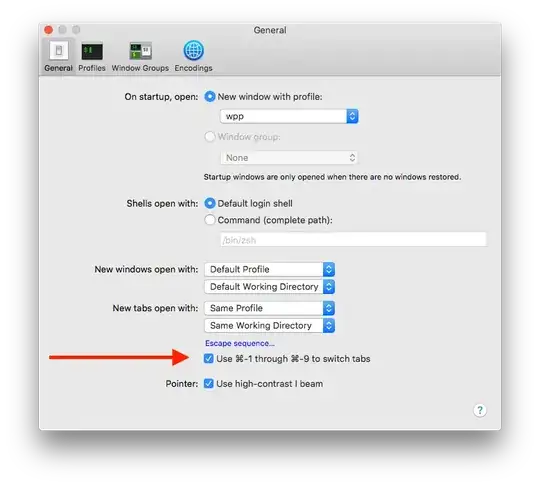
Stop and disable the DiagTrack service.

^ click to enlarge

Make a software restart of the computer – press WinKey+x followed by u and r.
– With this single change it now takes less than 8 minutes for Windows to start up – including the time it takes to log in.

You may have to do this every time Windows Update installs a new build version.

2. Disable the DiagTrack service from the command line

Alternatively, the DiagTrack service can be disabled from the command line as follows.

Open the command line as administrator – hit WinKey+r, type cmd, hold down Ctrl+Shift and press Enter.

Then run : 1
net stop DiagTrack & sc config DiagTrack start= disabled

Expect a response like :
The Connected User Experiences and Telemetry service was stopped successfully.
or :
The Connected User Experiences and Telemetry service is not started.
and :
[SC] ChangeServiceConfig SUCCESS

3. Block the DiagTrack service permanently in the registry

A third alternative to prevent the DiagTrack service from running again is to block it by renaming its corresponding registry key.

Press WinKey+r, type regedit and hit Enter.
In the navigation bar, paste HKLM\SYSTEM\CurrentControlSet\Services\DiagTrack, Enter.
Right-click DiagTrack and choose Rename.
Paste/type for example DiagTrack-BLOCKED!! and press Enter. Restart for it to take effect.

As long as you don't restore the original name, the DiagTrack service is now permanently blocked and will never run again (well, not until Windows Update installs a new build version).


How to restore the DiagTrack service

If you later want to run the DiagTrack service again, just remove the suffix -BLOCKED!! so that the original name DiagTrack is restored.

Then enable and restart the service :
sc config DiagTrack start= auto & net start DiagTrack
Restart the computer.

4. More suggestions to make Windows more responsive (optional)

What I describe in this section is highly dependent on my personal preferences – so just disregard whatever you disagree with.

Disclaimer
If you try out any of the suggestions below, I rather strongly recommend doing one and only one change at a time, and making a software restart after each change. Otherwise you might not know what to revert if a change turns out to have undesirable results.

4a. Disable Windows Update

To disable Windows Update, in the registry add the suffix -BLOCKED!! to the following two keys :
HKLM\SYSTEM\CurrentControlSet\Services\wuauserv
HKLM\SYSTEM\CurrentControlSet\Services\WaaSMedicSvc
If you want more details, see this answer on how to permanently disable Windows Update.

4b. Disable Microsoft Edge

There are quite a few suggestions on how to disable Microsoft Edge.

4c. More services that I block

My perception of Windows Defender is that it acts more like a virus malware than an anti-virus goodware. In short, I don't want it in my computer.
To get rid of it, I use the same technique again – I rename the key
HKLM\SYSTEM\CurrentControlSet\Services\WinDefend
to WinDefend-BLOCKED!!.
This case is bit more tricky though, as I need to restart in Safe mode to rename the key.
For more details, see this answer on how to disable Windows Defender.

There are two more registry keys to which I add the suffix -BLOCKED!! :
HKLM\SYSTEM\CurrentControlSet\Services\TermService
HKLM\SYSTEM\CurrentControlSet\Services\SysMain

The TermService key corresponds to the Remote Desktop Services.
By disabling it, I get one less security vulnerability to worry about.

The SysMain key corresponds to the SysMain service which was named PreFetch or SuperFetch in earlier versions of Windows. A malfunction can make the SysMain service cause high CPU usage.

4d. Services that I disable

As I normally don't use the Internet Information Services (IIS) Server,
I might as well disable its service Application Host - tasks for IIS :
net stop AppHostSvc & sc config AppHostSvc start= disabled

The Connected Devices Platform Service makes no sense to me :
net stop CDPSvc & sc config CDPSvc start= disabled

I don't use the Downloaded Maps Manager :
net stop MapsBroker & sc config MapsBroker start= disabled

The Diagnostic Policy Service is [...] notorious for hogging up the system resources :
net stop DPS & sc config DPS start= disabled


How to restore any of the disabled services

sc config <service-name> start= demand

For example :
sc config AppHostSvc start= demand

4e. Executables that I prevent from running

Here are some .exe files that I don't want to run on my computer. To stop them, I simply replace them with empty files which have the exact same names. But before I do that, I first save the original file in a zip file and leave it in the same directory as the original file.
I might need to take full control of the file before I can replace it. 2

C:\Windows\System32\CompatTelRunner.exe
C:\Windows\System32\WerFault.exe
C:\Windows\System32\WerFaultSecure.exe
C:\Windows\SysWOW64\OneDriveSetup.exe


In a command line opened as administrator, I run :

cd C:\Windows\System32 && takeown /f CompatTelRunner.exe /a
 && icacls CompatTelRunner.exe /grant Administrators:f

and

cd C:\Windows\System32 && takeown /f WerFault.exe /a
 && icacls WerFault.exe /grant Administrators:f

and

cd C:\Windows\System32 && takeown /f WerFaultSecure.exe /a
 && icacls WerFaultSecure.exe /grant Administrators:f

and

cd C:\Windows\SysWOW64 && takeown /f OneDriveSetup.exe /a
 && icacls OneDriveSetup.exe /grant Administrators:f

4f. Adjusting for performance

Press WinKey+r, type sysdm.cpl (and hit Enter).
Click the Advanced tab, and then Performance > Settings....
In the Visual Effects tab, I choose Custom and check the following three settings :

  • Animate controls and elements inside windows
  • Show window contents while dragging
  • Smooth edges of screen fonts

'System Properties' > 'Performance Options' > 'Visual Effects'

4g. Maybe turn off background apps?

Press WinKey+i and click Privacy. In the left pane scroll down and click Background apps.
At the top of the right pane – where it says Let apps run in the background – turn it Off.

5. Final remarks

After spending three weeks full time on unbricking my laptop – bricked by a Windows Update – I finally feel that it starts up within (almost) reasonable time, and that it's now mostly acceptably responsive.
My laptop now restarts in less than 6 minutes – including the time it takes to log in and start some of my basic files and applications. I still wish it would restart faster, but 6 minutes instead of 45 minutes on every restart – that's clearly a considerable improvement.

Actually, I can restart my laptop in less than 3 minutes if – instead of making software restart – I shut it down (WinKey+x followed by u and U) and then restart it by pressing the physical power button. (I believe such a restart will not install any updates that may have been downloaded by Windows Update.)

References


1 Never, ever run sc delete!

2 Since for each file, I save a zip file containing the original .exe file, I can easily restore them if needed.

Henke
  • 813
  • 1
  • 8
  • 20
  • 2
    I admire the effort you made writing this, this could be a helpful answer. I'm sorry to say that this, as it is now, is, unfortunately, a terrible answer. First of all, it doesn't answer your own question (THE and MOST significant change) but most of all your suggestions to e.g. blocking services without explaining what they are used for, doesn't help anyone. It would be great if you could improve on that, so it will be helpful for everyone. – Albin May 23 '22 at 04:30
  • Thanks for your suggestions. I believe they helped me improve my answer. – Henke May 24 '22 at 10:15
  • 1
    Much better, thanks +1! I'll try that myself as well... – Albin May 24 '22 at 11:26
  • 1
    Amazing answer! – Moab May 25 '22 at 20:47
  • How much were you able to shave off from the 45 minutes reboot time? – gronostaj Aug 03 '22 at 14:22
  • > _How much were you able to shave off from the 45 minutes reboot time?_ **Answer**: ~ 45 - 8 = ~ 37 minutes. The 45 minutes is not very exact, as it includes starting some of my personal files and programs. A _hardware_ restart (winkey+x, u, u, followed by pressing the physical button once the computer is shut down) is always faster than a _software_ restart (winkey+x, u, r). I believe this has to do with Windows Update running _only_ when you make a software restart. For me, a hardware restart takes about half the time of a software restart, in my case ~ 2-4 minutes. – Henke Aug 03 '22 at 14:50
  • Wow, that's still very long. None of the computers I've had in the last 10 years took more than 5 minutes to restart and they weren't exactly cutting edge hardware. While I applaud the amount of work you've put into researching this, I feel like you'd get much, much better results by just setting everything up from scratch and I wouldn't be surprised if it would take less of your time. If you wanted to use it as an opportunity to learn something, then sure - been there, done that - but frankly regarding the slow restart issue the results aren't exactly satisfying. – gronostaj Aug 18 '22 at 12:21
  • 1
    Nevertheless, 82% faster is impressive. Regarding "software restart" vs "hardware restart": since Windows 8 shutdown actually stops processes and hibernates the system because it's faster. Restart does a proper full shutdown followed by a cold boot. – gronostaj Aug 18 '22 at 12:27
  • This whole answer is wrong. Today I unblocked DiagTrack and restarted. It took about 6 minutes, which (unfortunately) is normal for my laptop. ~ * ~ I have strong reason to believe that the slow restart is because of [Windows Modules Installer Worker](https://www.thewindowsclub.com/windows-modules-installer-worker-high-cpu-disk-usage), and its exe-file [TiWorker.exe](https://wethegeek.com/how-to-fix-tiworker-exe-high-disk-usage-problems-on-windows-10). [More on TiWorker.exe](https://digiworthy.com/2020/04/18/tiworker-exe-high-disk-usage-windows-10). – Henke Oct 03 '22 at 15:07